Case study — Leeds
How we turned the website of a working Yorkshire weaving mill in Otley, Leeds into a filterable fabric library, a trade-and-retail shop and a steady source of named enquiries.
Written by Rod Hall, owner of Network Digital
THE BRIEF
Marton Mills has been weaving cloth in Otley, in the City of Leeds, since 1931 — a history confirmed by its Companies House record, which lists the mill as incorporated on 10 December 1931 with textile weaving as its trade. Its fabrics serve highlandwear, interiors and tailoring buyers. The website brief brought fabric discovery, sample requests and trade ordering together in one place.
We rebuilt the site around a filterable cloth library and detailed swatch photography. Trade customers can use account pricing, while the public can order by the metre. Sample requests give the sales team contact details to follow up.
What the client says
“Network Digital took the time to understand how a working mill actually sells — samples first, trade accounts, metre orders — and built the website around that. The fabric library alone has transformed how buyers find us, and the free-sample system brings in named enquiries every week. They are straightforward to deal with and everything was explained in plain English.”
Sales team
Marton Mills · Otley, Leeds
The rebuilt site works as a sales tool, not a brochure — for a Leeds manufacturer selling to buyers on every continent.
Hundreds
of cloths in one filterable fabric library
3 free
samples ordered online — enquiries without a phone call
Trade + retail
wholesale and public pricing on a single site
Global
buyers and specifiers reached from a Leeds district mill
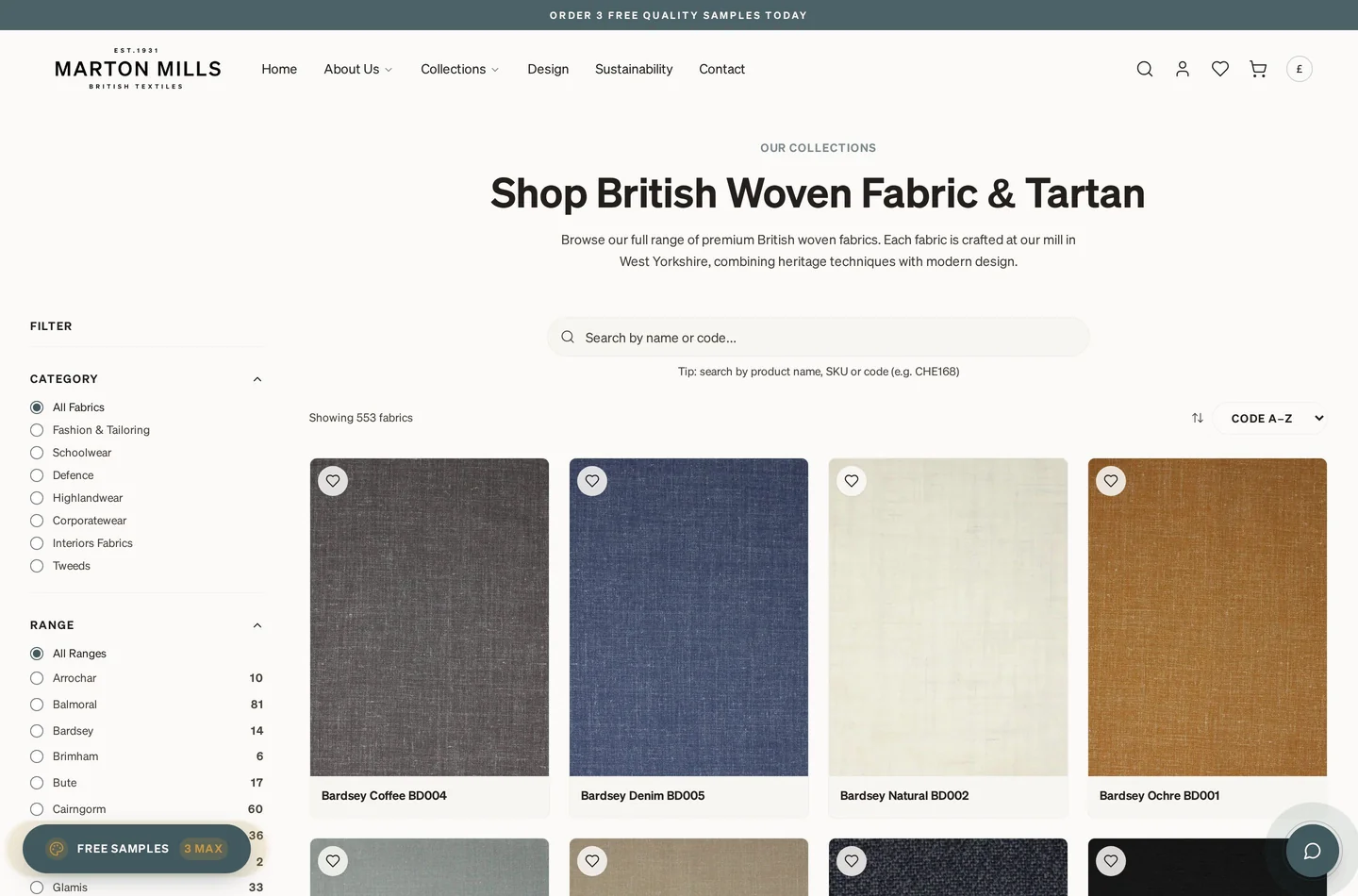
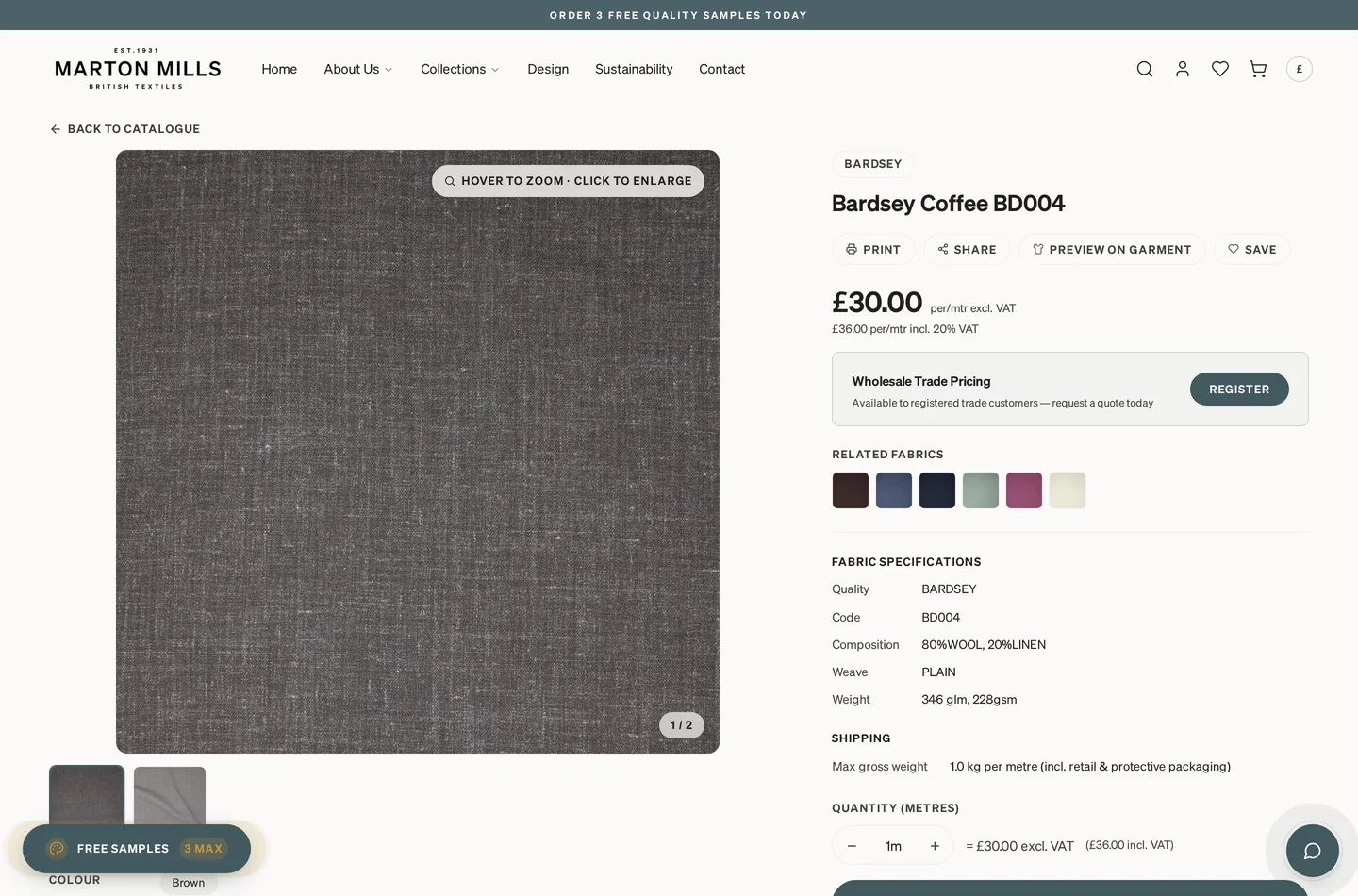
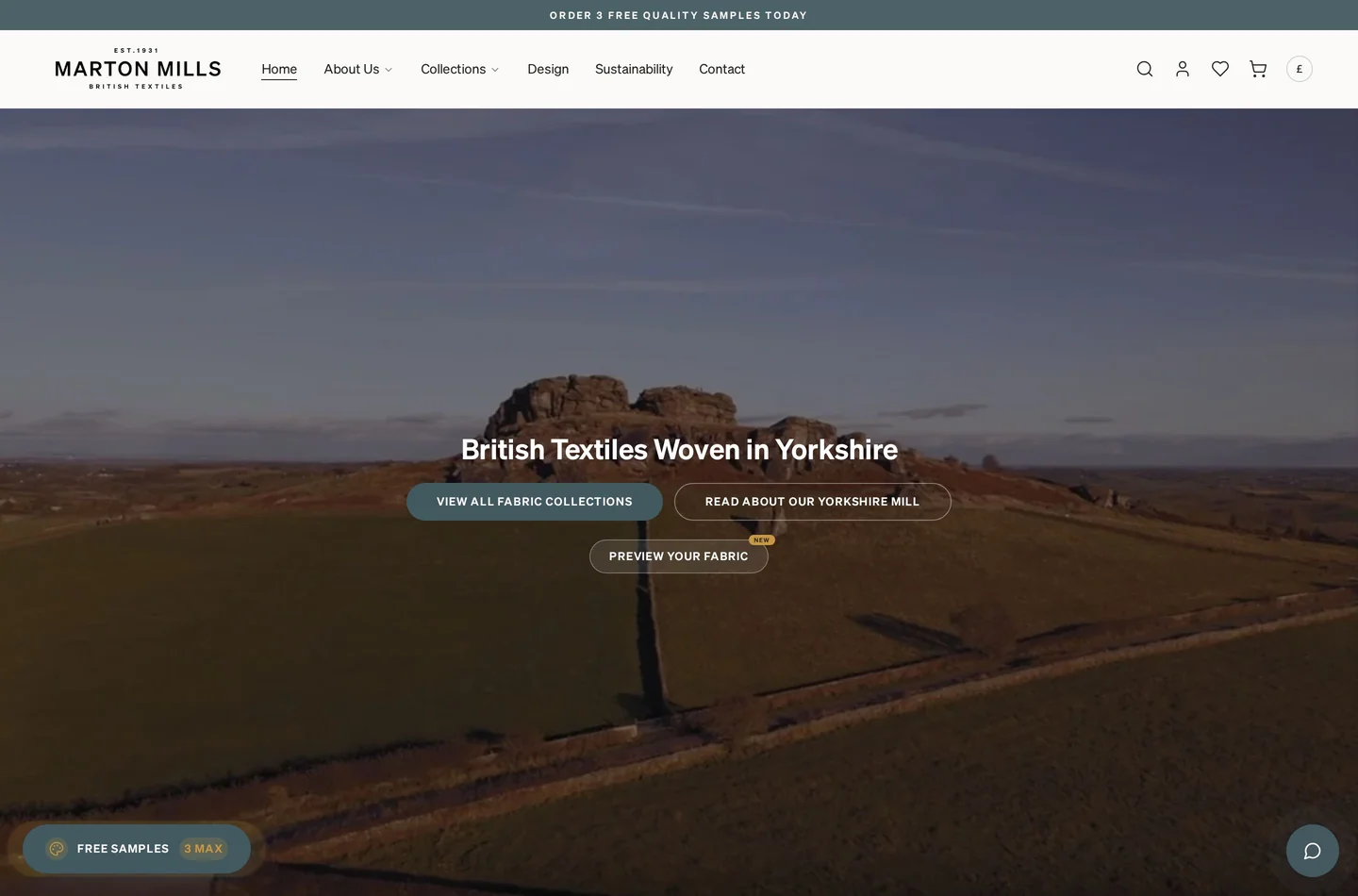
Three views of the finished site — the heritage-led homepage, the filterable fabric catalogue and a fabric detail page with full specifications.

Homepage
Heritage-led hero with clear routes into collections and a free-sample offer bar.

Fabric catalogue
Hundreds of cloths filterable by collection, colour, composition and weight.

Fabric detail
Zoomable weave photography, full specs and trade pricing beside retail.
A buyer starts with the fabric catalogue, uses the filters to shortlist cloth and opens a product page for specifications. The next step is a sample request or an order. This keeps product research separate from the sales conversation without hiding the route to help.
Composition, colour, weight and intended use answer different buying questions. A tailor may compare the cloth weight; an interiors buyer may begin with colour and composition. A consistent product structure lets both customers explore the same range without learning the mill's internal filing system.
Photographs help buyers compare a weave and create a shortlist, but a screen cannot guarantee an exact colour match. Physical samples remain important. A clear sample route lets the customer inspect the cloth before deciding, while giving the mill a useful starting point for a conversation.
Trade account access and public ordering serve different customer needs. Account pricing belongs behind the relevant login; public product information should remain easy to browse. Before commissioning a similar site, agree minimum quantities, units, pricing visibility and who can approve a trade account.
Those rules affect more than the design. They shape product data, checkout decisions and the information a sales team needs when an enquiry arrives. Bringing them into the brief early avoids a polished catalogue that still requires staff to explain every order by email.
Bring a representative product list, sample-order rules and examples of the questions buyers repeat. Identify which details are public and which are account-only. Include original product photographs and decide who will keep specifications current after launch. These inputs help define a practical scope before a fixed-price quote is agreed.
The screenshots show the website and its ordering features, not a measured increase in revenue or search rankings. A results review needs a stated period and access to enquiry or sales records. Your project should agree those measures in advance, then compare genuine enquiries and completed orders after launch.
For an existing manufacturing or trade website, our Yorkshire SEO services bring technical checks, useful product content and enquiry measurement into one agreed plan.
The same five-step process we bring to every Leeds web design and development project.
01
We spent time on site with the sales and design teams, mapping how orders actually arrive: sample requests by phone, trade accounts on account pricing, retail metre orders, and specifiers asking for composition and weight data.
02
The whole range was modelled as structured product data — quality, code, composition, weave, gsm and glm, colourway and related shades — so one clean source powers filters, specification tables, search and the shop.
03
Cloth sells on colour. We set the photography standard — consistent lighting, macro weave detail and hover-zoom — so what a buyer sees on screen matches what arrives on the roll.
04
Retail pricing shows publicly per metre inc. and exc. VAT, while registered trade customers get wholesale pricing behind a login — protecting margins and existing agent relationships in one website.
05
Fabric, tartan and highlandwear search terms were targeted at page level, the site was launched on fast UK hosting with the team trained to run it, and we've kept improving it since.
The claims on this page are backed by the project itself and by these independent, primary sources — not by second-hand summaries.
The official register entry confirming the mill's incorporation in December 1931, its Otley address and its textile-weaving trade.
The official rules on fibre composition labelling that shape how fabric specifications are presented to trade and retail buyers.
Google's own guidance on local visibility, which informed the search work in this project's scope.
Whether you manufacture in Otley, trade in the city centre or serve customers across West Yorkshire, we build websites that bring in enquiries — with fixed prices and plain-English advice.